
Reconnect to Life.
Finally a medication-free treatment for Depression.
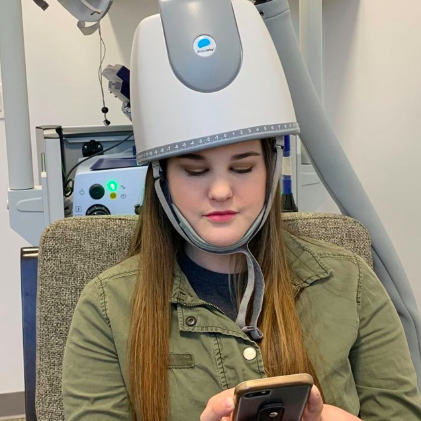
TMS stimulates your brain from the comfort of an armchair. It is highly effective. Most patients will see a significant reduction of symptoms or total remission, even when drug treatments have failed.
Highly Effective
Approximately 75% of patients who complete a full course of TMS show a clinically meaningful response and about 50% experience a full remission, meaning their symptoms go away completely.
Covered by Insurance
All major insurance’s cover TMS treatment for Depression. If you’ve tried multiple antidepressants and therapy, there’s a good chance your insurance covers it.
On Your Own Time
Sessions are about 20 minutes and you can drive to and from your appointments. The full course covered by insurance usually takes about 6-8 weeks to complete.
Our happy customers
We’ve Treated +500,000 Patients
Here are some of the things they say about us
Cam B.
Patient
“Dr. Radovich is such a good listener and interprets my story in ways I never could. His knack for understanding and adding mental exercises helps me personally grow in mind and spirit. He’s the best!”
Anna B.
Patient
My therapist here (Tina) is compassionate and amazing. She helps me work through what I want to, at my pace. I trust her and value her guidance.
Shiv G.
Patient
“I have been working with Dr. Lori Garfinkel for more than a year now. To say that she has played a decisive role in helping me better understand my own actions, behaviors and overall personality would be an understatement.”
Effective, insured, convenient!
What Is TMS?
TMS is an FDA approved treatment for major depressive disorder and supported by the American Psychiatric Association. It has been well studied since the 1980s and tens of thousands of patients have been successfully treated. It is used by many academic centers as well for treatment resistant depression, including Harvard University affiliates, Stanford University, the Mayo Clinic, and Northwestern University to name a few!
This is a completely non-invasive, in office procedure without sedation or anesthesia. Patients are safe to before and after the procedure. It is helpful for patients who have tried multiple medications and therapy but had limited relief. Almost all insurance plans cover for this service. TMS has a high success rate and 2/3 patients benefit from the treatment ranging from reduction of symptoms by 50% to full remission at the end of treatment. Each treatment session is about 20 minutes long and a full course is a series of multiple treatment sessions.
Meet The Founder & Psychiatrist
Dr. Hong Yin
Hong Yin, MD, has been a practicing medical professional for the Milwaukee community since 2012. She understands that your health and wellness concerns extend beyond routine medical care. She’s a highly trained, board-certified psychiatrist who provides an array of comprehensive services and procedures to help people overcome mental health problems
- 12+ Years of Experience
- Personalized Appointments
- Board-Certified

You ask, we answer
Some of our Frequently Asked Questions
TMS (Transcranial Magnetic Stimulation) therapy is a non-invasive and FDA-approved treatment for various mental health conditions, including depression, anxiety, and obsessive-compulsive disorder (OCD). This therapy uses magnetic fields to stimulate nerve cells in the brain, which can alleviate symptoms and improve overall well-being.
TMS therapy works by using magnetic fields to stimulate specific areas of the brain that are associated with mood regulation and emotional processing. During a TMS session, a magnetic coil is placed against the scalp, and a rapidly changing magnetic field is generated, which induces an electrical current in the brain. This current can activate nerve cells that may not be functioning correctly, leading to improvements in symptoms related to depression, anxiety, and other mental health conditions. The exact mechanism by which TMS therapy produces its beneficial effects is still being studied, but it is believed to involve changes in neural plasticity and the release of neurotransmitters in the brain.
Whether TMS therapy is right for you depends on various factors, including your specific symptoms, medical history, and treatment goals. TMS therapy has been shown to be effective for many individuals with depression, anxiety, and other mental health conditions, particularly those who have not responded well to traditional treatments such as medications or psychotherapy. However, it is important to consult with a healthcare professional to determine whether TMS therapy is a suitable option for you. A consultation with a TMS specialist can help you learn more about the treatment, its potential benefits, and whether it may be a good fit for your individual needs.
During a TMS (Transcranial Magnetic Stimulation) therapy session, you may feel a tapping or clicking sensation on your scalp where the magnetic coil is placed. This tapping sensation is typically painless and generally well-tolerated by most individuals. Some people also report feeling a mild headache or scalp discomfort during or after the treatment, but these side effects are usually temporary and go away shortly after the session is completed.
It’s important to note that everyone’s experience with TMS therapy is different, and some people may not experience any discomfort at all. If you have concerns about potential side effects or discomfort during TMS therapy, it’s best to speak with a TMS specialist who can provide more detailed information and address any questions you may have.
TMS (Transcranial Magnetic Stimulation) therapy is generally considered to be a safe and well-tolerated treatment for mental health conditions such as depression, anxiety, and obsessive-compulsive disorder. However, like any medical procedure, TMS therapy may be associated with some potential side effects.
Common side effects of TMS therapy include mild headache, scalp discomfort, and muscle twitching or spasms in the face or jaw during the session. These side effects are typically mild and short-lived, and can be managed with over-the-counter pain medication if needed.
Rarely, more serious side effects such as seizures or mania may occur, but these are extremely rare and typically only occur in individuals with certain pre-existing medical conditions. It’s important to discuss any potential risks or concerns with a healthcare professional before starting TMS therapy.
Overall, TMS therapy is a safe and well-tolerated treatment option for many people with mental health conditions, and the benefits of the treatment generally outweigh the potential risks or side effects.
Many insurance plans do cover TMS (Transcranial Magnetic Stimulation) therapy, but coverage varies depending on the specific plan and insurance provider. Some insurance plans may cover the full cost of TMS therapy, while others may cover only a portion of the cost or require a copayment or deductible.
It’s always a good idea to check with your insurance provider to see if TMS therapy is covered under your plan and what your out-of-pocket costs may be. Some TMS clinics also offer assistance with insurance coverage and can help you navigate the insurance process.
© 2026 New Frontiers Psychiatric & TMS. All Rights Reserved.